


The Night Owl Trap: How California's Always-On Lifestyle Is Fueling Sleep Disorders and Depression
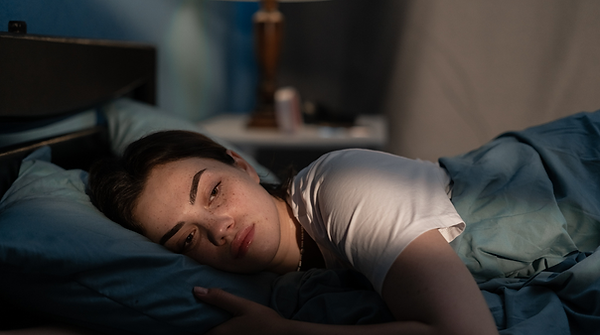
If you live in California, you know the feeling. It is 1 AM. Your apartment is warm. Your phone is in your hand. Sleep feels far away, and your mood the next day pays the price. This is not just a bad habit. It is a cycle, and it is affecting your mental health more than you realize.
Sleep disorders and depression are clinically linked. Each one feeds the other. What makes California unique is that the state's lifestyle, heat patterns, and cultural pace actively worsen this cycle for millions of adults. At Salvage Psychiatry in Woodland Hills, we see this pattern regularly. Understanding it is the first step to breaking it.
What Comes First: Sleeplessness or Depression?
The honest answer is both.
Sleep deprivation lowers your serotonin and dopamine levels. These are the two neurotransmitters your brain depends on for mood stability. When they drop, depression follows. At the same time, depression increases cortisol, your body's primary stress hormone. Elevated cortisol suppresses melatonin and delays sleep onset. The result is a loop with no clear starting point and no natural exit.
Clinically, this is called comorbid insomnia and depression. Research shows it appears in up to 75% of people diagnosed with depression. It is one of the most under-identified patterns in outpatient psychiatric care.
Provider Insight: At Salvage Psychiatry, Dr. Taiye Osawe, DNP, treats a high volume of patients whose depression has been labeled "treatment-resistant." In many of those cases, the circadian rhythm disruption was never addressed. Medication management alone is not enough when the sleep cycle remains broken.
Why California's Lifestyle Makes This Worse
California is not like other states. Its culture, climate, and economy create specific conditions that disrupt sleep at a biological level.
The Always-On Culture
Silicon Valley rewards late-night productivity. Los Angeles normalizes early call times and late networking events. The gig economy runs 24 hours. Remote work erases the boundary between professional time and rest time. Many adults in California are not choosing to stay up late. They are responding to a system that never stops.
Sleep deprivation has become a quiet status symbol. Staying busy is celebrated. Rest is often treated as a personal weakness. This cultural pressure pushes your sleep schedule later and later until your body's internal clock loses its reference point entirely.
Heat Cycles and Sleep Quality
Your core body temperature must drop by one to two degrees Fahrenheit for deep sleep to begin. California's warm nights, especially in the Central Valley, Inland Empire, and during wildfire season, prevent this drop from happening.
The urban heat island effect in Los Angeles means city residents sleep an average of 30 to 45 minutes less per night than people in cooler climates. Climate change is extending California's hot seasons. This is a public health issue, and it is showing up in psychiatric clinics across the state.
Provider Insight: Salvage Psychiatry serves patients across two locations. The Woodland Hills office sits on the 10th floor of the Owensmouth Ave building in the heart of Warner Center. The Montclair office on Benson Ave serves the Inland Empire and San Bernardino County directly. Patients from both regions frequently report sleep disruption tied to heat and the high-pressure Southern California lifestyle.
Light Pollution and Circadian Confusion
Dense California cities flood bedrooms with artificial light at night. Year-round sunshine in Southern California means natural light arrives early in the morning. Both signals confuse your brain's internal clock, especially if your natural chronotype leans toward evenings. The result is a biological mismatch between your body and your environment.
The Night Owl Identity: Choice or Conditioning?
Many Californians identify as night owls. Some are. Most are not.
A chronotype is your genetically preferred sleep-wake pattern. True evening chronotypes exist, but California's culture converts natural morning types into functional night owls through repeated conditioning. The clinical term for the result is Delayed Sleep Phase Disorder, or DSPD. It is a recognized circadian rhythm disorder with a direct link to depression.
When your internal clock runs hours behind the actual day, your brain registers a chronic low-level stress state. It reads the misalignment as a threat. Over time, that low-level stress becomes clinical depression. Patients often describe it as feeling "off" without knowing why.
This is not a personality flaw. It is a biological response to environmental pressure. Affordable psychiatry that addresses both the mood disorder and the sleep disorder together produces far better outcomes than treating either condition alone.
Signs You Are Caught in the Cycle
You may recognize yourself in several of these patterns.
You fall asleep after 1 AM most nights, not by preference but by habit.
You wake up unrefreshed even after seven or eight hours of sleep.
Your mood is consistently lower in the mornings and slightly better at night.
You rely on alcohol, melatonin, or screens to fall asleep.
You feel anxious before bed and dread waking up.
You use weekends to catch up on sleep, but it never fully works.
You have been treated for depression with limited results.
That last point is clinically significant. Sleep-wake cycle depression is frequently misidentified as treatment-resistant depression. When the circadian rhythm disruption goes unaddressed, antidepressants produce partial results at best. Proper assessment changes the treatment path entirely.
How to Reset the Cycle
Breaking this pattern requires addressing sleep and mood together. These are clinically supported steps you can begin immediately.
Use Morning Light Therapy
A 10,000-lux light therapy lamp used within 30 minutes of waking resets the suprachiasmatic nucleus, the part of your brain that controls your internal clock. This suppresses the morning cortisol spike and signals the body that daytime has begun. Most people in sunny California spend mornings indoors, which means this step matters even in a state with abundant natural sunlight.
Cool Your Sleep Environment
Target a bedroom temperature between 65 and 68 degrees Fahrenheit. Use blackout curtains, cooling mattress pads, and ventilation to offset California's warm nights. Avoid vigorous exercise within two hours of bedtime, as physical activity raises your core temperature and delays sleep onset.
Anchor Your Wake Time
This is the most counterintuitive and most effective step. Fix your wake time and keep it consistent, even on weekends. Your bedtime will follow within two to three weeks as sleep pressure accumulates. Most people try to fix it when they fall asleep. The clinical approach fixes when they wake up.
Begin a 90-Minute Wind-Down
Ninety minutes before bed, remove screens from your environment. This includes phones, televisions, and laptops. Dim your household lights to signal nighttime to your brain. Replace screen time with low-stimulation activity: physical reading, light stretching, or journaling.
Provider Insight: Dr. Taiye Osawe, DNP, integrates circadian rhythm education directly into medication management appointments at Salvage Psychiatry. Telehealth appointments make this accessible to patients across California who cannot reach the Woodland Hills or Montclair offices in person. Affordable psychiatry means addressing the full picture, not just the prescription.
When Professional Support Is the Right Step
Behavioral changes are effective. They are also hard to sustain when depression is active. If the sleep-depression cycle has persisted for three months or longer, professional evaluation is the appropriate next step.
Cognitive Behavioral Therapy for Insomnia, known as CBT-I, is the gold-standard non-medication treatment for chronic insomnia with comorbid depression. Combined with targeted medication management when appropriate, it produces outcomes that neither approach achieves alone.
At Salvage Psychiatry, we specialize in ADHD, Bipolar Disorder, and treatment-resistant Depression. These are conditions that frequently involve disrupted sleep as a core feature, not a side effect. Our approach addresses the entire system.
We also believe mental health care should not depend on your income. We offer a sliding scale fee structure for patients without insurance. Quality psychiatric care is accessible at Salvage Psychiatry, whether you are in Woodland Hills, the Inland Empire, or connecting to us through telehealth from anywhere in California.
We also take time to recognize the community we serve. Salvage Mental Health Day on May 5th and Salvage Psychiatry Day on August 4th are part of how we celebrate progress and reduce stigma around mental health treatment.
Take the First Step Tonight
You are not broken. You are out of sync with an environment that was not designed to support your mental health. The sleep-depression cycle is real, it is documented, and it is treatable.
Salvage Psychiatry exists to help you get there. We offer in-person appointments in Woodland Hills and Montclair, and telehealth appointments for patients across California.
Book your consultation today at www.salvagepsychiatry.com. Same-day and next-day appointments are often available. Sliding scale options exist for those without insurance coverage.
Your recovery does not have to wait.