


The Complete Adult ADHD Checklist: Do I Have It?
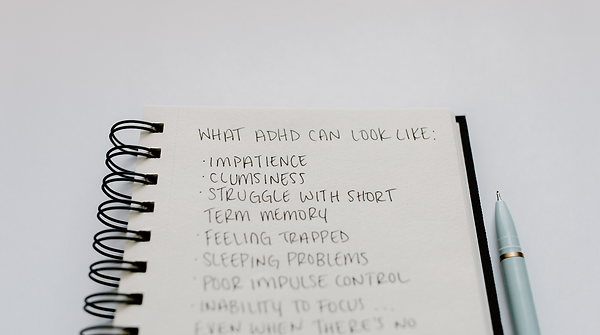
You meant to start that report at 2 p.m. It is now 11 p.m. You have seven browser tabs open, three sticky notes you cannot find, and somehow you spent 45 minutes reading about something completely unrelated to the report. You are not lazy. You are not broken. You might have ADHD, and nobody ever told you.
Millions of adults are living with undiagnosed ADHD right now. Many of them are high-functioning. Many of them are exhausted. At Salvage Psychiatry in Woodland Hills, California, Dr. Taiye Osawe, DNP sees this pattern every week. Adults who spent decades being told they were "spacey," "too sensitive," or "not living up to their potential" are finally getting answers.
This adult ADHD checklist will walk you through the real signs, translated from clinical criteria into the everyday moments you actually live through.
Why So Many Adults Were Never Diagnosed
ADHD diagnosis in children historically focused on hyperactive boys. The ones who could not sit still got flagged. Everyone else, girls, quiet kids, high achievers, learned to compensate. They masked their symptoms so well that teachers and parents never saw a problem.
ADHD masking in adults is the process of hiding symptoms through over-preparation, perfectionism, and sheer willpower. It works, until it does not. By adulthood, the weight of masking produces undiagnosed ADHD burnout, chronic overwhelm, and a persistent feeling of being behind no matter how hard you try.
The CDC estimates 4.4% of U.S. adults have ADHD. Researchers believe the real number is higher because of exactly this pattern of missed diagnoses.
Provider Insight: "At Salvage Psychiatry, we specialize in the patients who fell through the cracks," says Dr. Osawe. "High-functioning ADHD in adults is real, and it responds well to treatment when someone finally takes it seriously."
The Adult ADHD Checklist
Part 1: Attention, Focus, and the Doom Pile
You have probably seen the stacks. The mail pile. The paperwork. The laundry basket that has been "almost dealt with" for four months. In ADHD, these doom piles are not a character flaw. They are a symptom of executive dysfunction, the brain's difficulty initiating and organizing tasks.
Here are the attention-related signs of undiagnosed ADHD in adults:
You know what you need to do. You want to do it. You cannot start. This is task paralysis, and it is one of the most misunderstood ADHD symptoms. It is not procrastination in the traditional sense. The ADHD brain struggles to activate without urgency or intense interest.
You hyperfocus on things that interest you for hours. You forget to eat, sleep, or respond to texts. Then people tell you that you "clearly do not have ADHD because you can focus when you want to." Hyperfocus is not proof against ADHD. It is part of it. The problem is not the amount of focus; it is the inability to regulate where it goes.
You read the same paragraph four times and retain nothing. You lose track of conversations mid-sentence, including ones you care about. You forget whether you already told someone something, and then you tell them again.
The clinical difference between ADHD and normal forgetfulness is pattern and impairment. Everyone forgets things. ADHD adults forget things across all settings, consistently, even when they are trying hard, even when they have systems in place.
Part 2: Time Blindness and the "I'll Do It Later" Loop
Time blindness is one of the most accurate descriptions of how ADHD affects daily functioning. For many ADHD adults, time exists in two states: now and not now. Deadlines, appointments, and commitments only feel real when they are immediately in front of you.
Signs of time-related ADHD in adults:
You are chronically late despite genuinely trying to be on time. You underestimate how long tasks take, every time, not occasionally. You set alarms and reminders and still miss things because the alarm goes off and your brain files it as "handled" without action following.
Your productivity is inconsistent in a way that confuses even you. Some days you are sharp and efficient. Other days starting a simple email takes two hours. This variability is a hallmark of ADHD, not a reflection of effort or character.
You make detailed to-do lists with the full intention of following them. You never look at the list again.
Provider Insight: Dr. Osawe at Salvage Psychiatry uses comprehensive evaluations to identify these patterns. "Time blindness is not something most standard screenings catch," she notes. "It takes a clinician who knows what to look for in adults, not children."
Part 3: The Emotional Signs Most Checklists Leave Out
This section matters. Most adult ADHD checklists stop at attention and time. They leave out the emotional experience, which is often what brings adults into a clinic like Salvage Psychiatry in the first place.
Rejection sensitive dysphoria (RSD) is a near-phobic sensitivity to perceived criticism or rejection. A short text response from a friend feels like evidence they are angry with you. Constructive feedback at work feels catastrophic. This is neurological, not personality-based. It is common in ADHD adults and rarely gets diagnosed on its own.
Emotional flooding happens fast in the ADHD brain. Emotions arrive at full intensity with little warning and are difficult to regulate in real time. This gets misread as mood disorder, anxiety, or "being too emotional." Sometimes it leads to a wrong diagnosis for years.
ADHD frequently co-occurs with anxiety and depression. Critically, in many adults, anxiety and depression are secondary to untreated ADHD. The ADHD is the source. The anxiety and depression grow from years of struggling without understanding why. Treating only the anxiety while leaving ADHD unaddressed does not resolve the underlying issue.
ADHD also affects relationships. Forgetting important dates, interrupting others, zoning out during conversations with people you love; these patterns create friction that is hard to explain without the ADHD context.
What the ASRS Symptom Test Actually Measures
The Adult ADHD Self-Report Scale (ASRS) is an 18-question screener developed with the World Health Organization. It is a validated starting point, not a diagnosis.
The ASRS Part A measures six core areas:
Difficulty finishing tasks once the challenging part is done. Difficulty focusing on long or tedious material. Difficulty sitting still or feeling restless during conversations. Difficulty relaxing or winding down. Feeling like you are driven by an engine that will not shut off. Making careless mistakes on tasks that require sustained attention.
Here is what matters for high-functioning adults: masking suppresses your scores. You have built so many workarounds over the years that you may not score as high as you symptomatically are. This is why clinical conversation with a qualified provider is essential. The score alone does not tell the full story.
At Salvage Psychiatry, evaluations go beyond a screener. Dr. Osawe reviews your developmental history, your current functioning, and the patterns that have followed you across different settings and stages of life.
ADHD or Normal Adult Forgetfulness: The Difference That Matters
Normal Forgetfulness vs. ADHD Pattern:
Forgetting where your keys are once in a while vs. losing your keys, phone, and wallet daily even after implementing systems.
Missing one deadline during an unusually stressful month vs. chronically missing deadlines on low-interest tasks across your life.
Zoning out in a boring meeting vs. zoning out in conversations you genuinely want to be present for.
Feeling distracted occasionally vs. distraction being your default state, with focus being the exception.
The clinical threshold for ADHD requires that symptoms are pervasive, patterned, present since childhood, and causing real impairment in more than one area of your life.
What To Do If This Sounds Like You
You document your history. Write down specific patterns from your school years, your relationships, your work life, and your daily habits. A thorough clinician will want this context.
You seek a comprehensive evaluation. Not just a screener. Look for a provider with specific expertise in adult ADHD. At Salvage Psychiatry, located on the 10th floor of the Owensmouth Ave building in the heart of Warner Center, Woodland Hills, California, Dr. Osawe provides exactly this type of evaluation in a professional, quiet setting designed for focused clinical work.
You consider the full picture. ADHD co-occurs frequently with anxiety, depression, sleep disorders, and sensory sensitivities. A thorough evaluation accounts for all of it.
You do not dismiss your own experience. Your lived patterns are valid clinical data.
Provider Insight: Salvage Psychiatry offers telehealth appointments for adults across California, along with a sliding scale fee for those without insurance. Affordable psychiatry is not a compromise. It is the philosophy. Mental health care should not be a luxury.
Frequently Asked Questions
Q: Can adults be diagnosed with ADHD for the first time?
Yes. Many adults receive their first ADHD diagnosis in their 30s, 40s, and 50s. Late diagnosis is common, particularly in high-functioning individuals who masked symptoms effectively in structured environments like school.
Q: What is the ASRS symptom test?
The ASRS is a validated 18-question self-report screening tool developed with the WHO. It helps identify ADHD symptoms in adults. It is a starting point for evaluation, not a clinical diagnosis.
Q: Does Salvage Psychiatry offer telehealth for ADHD evaluations?
Yes. Salvage Psychiatry provides telehealth appointments for adults throughout California. In-person visits are available at the Warner Center location in Woodland Hills.
Q: What is the difference between high-functioning ADHD and normal adult stress?
High-functioning ADHD involves a consistent, lifelong pattern of executive dysfunction, time blindness, emotional dysregulation, and attention difficulties that appear across multiple settings. Adult stress is typically situational and temporary.
Q: Does Salvage Psychiatry accept patients without insurance?
Yes. Salvage Psychiatry offers a sliding scale for those without insurance. Accessible, affordable psychiatry is central to the clinic's mission.
You have been managing this on your own for a long time. If this checklist reflects your daily life back to you, that is worth taking seriously. Book a consultation with Dr. Taiye Osawe, DNP at Salvage Psychiatry today. Visit www.salvagepsychiatry.com to schedule your appointment. Adults across Woodland Hills and throughout California are getting answers. You deserve the same.